
Last updated July 28, 2026
Free printable chart: every ANSI, Architectural and ISO A sheet size on one A4 page, in inches and millimetres — download the Drawing Sheet Sizes reference chart (PDF). Print it and pin it above the desk.
North America runs two separate series of drawing sheet sizes, and they use the same letters. ANSI A to E are the engineering sizes built up from Letter paper. Arch A to E are the architectural sizes. An Arch B is not an ANSI B, and the drawing that comes back from the plotter with an inch missing off the border is usually that fact arriving the hard way.
ANSI or Arch? The rule that saves the reprint
Both series run A, B, C, D, E. For every letter, the Arch sheet is the bigger one — without exception:
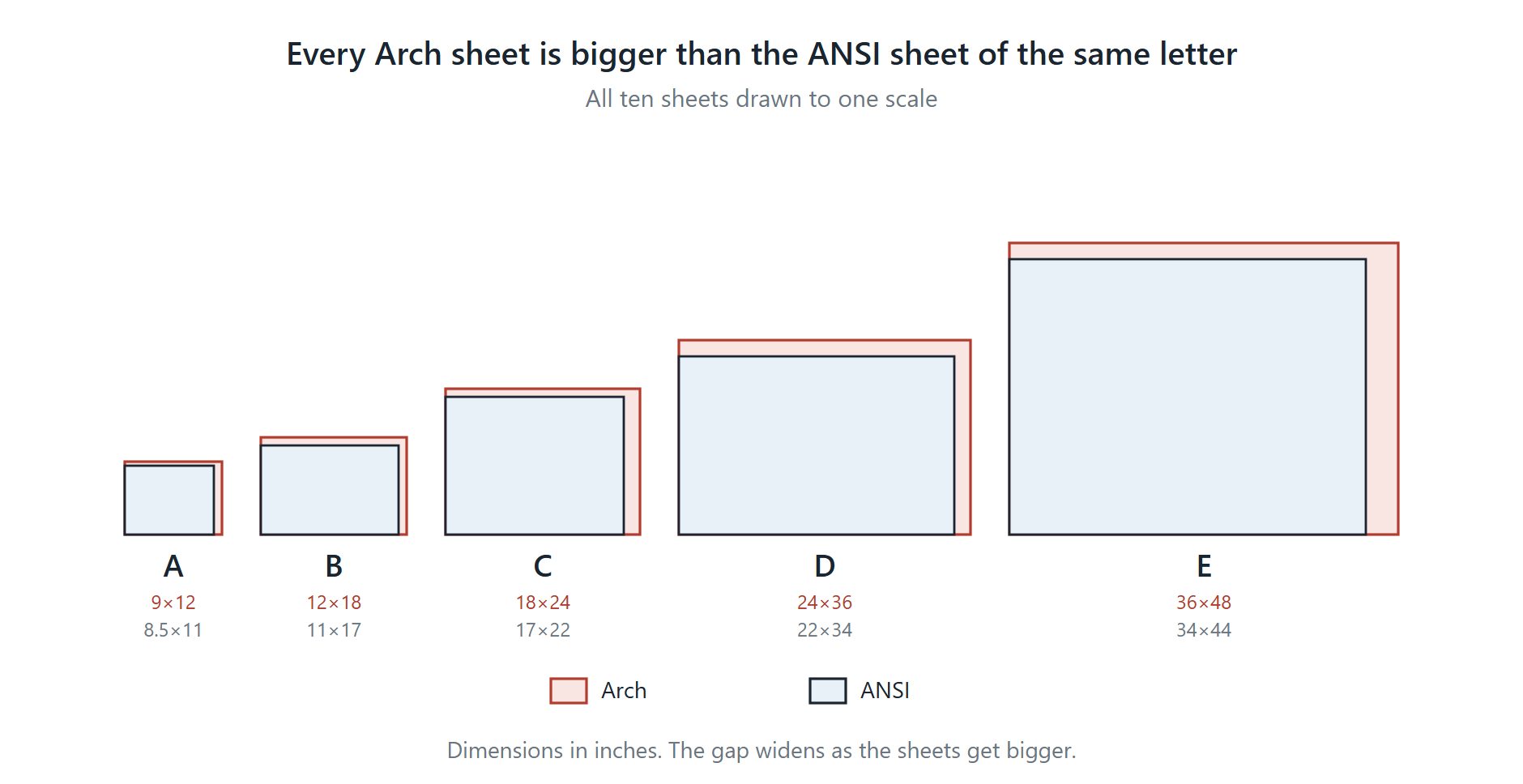
| Letter | ANSI (in) | Arch (in) | Difference |
|---|---|---|---|
| A | 8.5 × 11 | 9 × 12 | +0.5 × +1 |
| B | 11 × 17 | 12 × 18 | +1 × +1 |
| C | 17 × 22 | 18 × 24 | +1 × +2 |
| D | 22 × 34 | 24 × 36 | +2 × +2 |
| E | 34 × 44 | 36 × 48 | +2 × +4 |
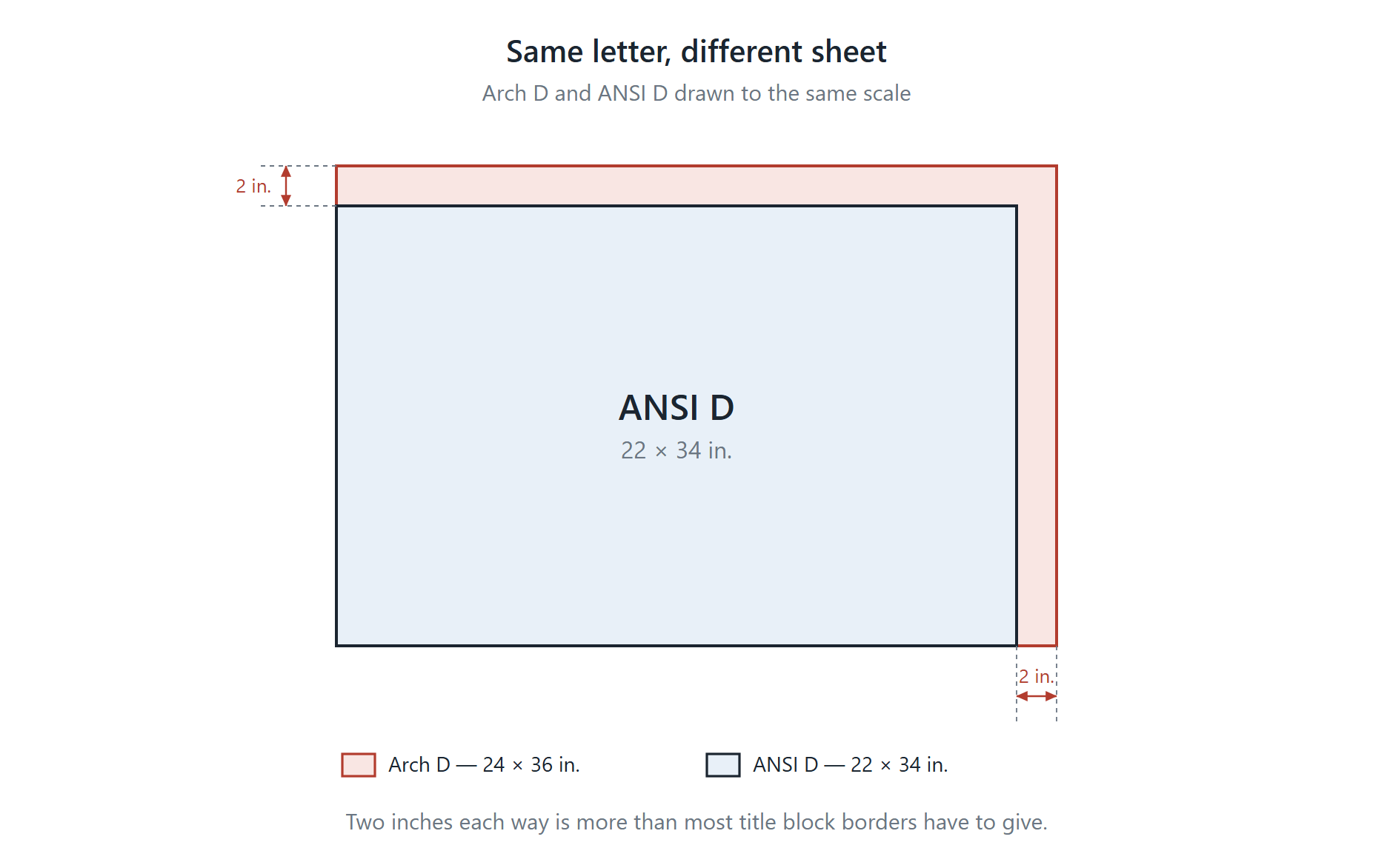
D is where this bites hardest, because D is the size most sets are issued at. Arch D is 24 × 36 in.; ANSI D is 22 × 34 in. Two inches each way is more than most title block borders have to give, so a set laid out for one and plotted on the other either loses its border or floats in the middle of the sheet with the title block off the trim line.
If a drawing just says “D size”, that is not enough information to plot it. Ask, or measure the border.
Architectural Paper Sizes
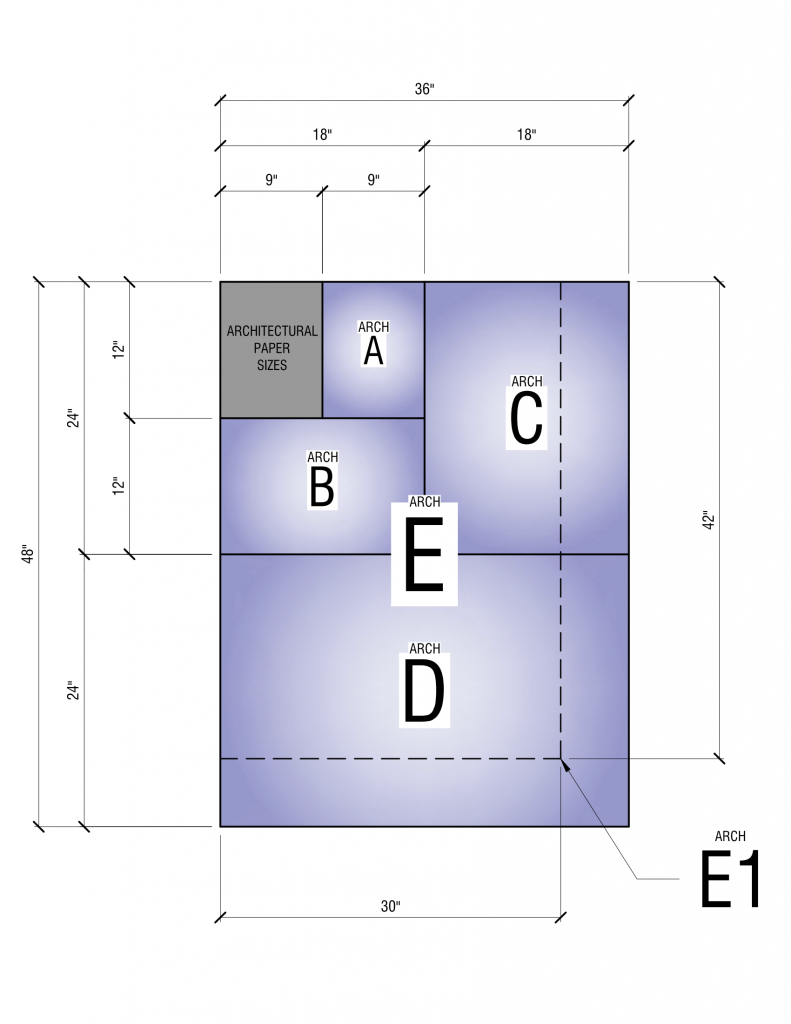
North America has a special series of paper sizes defined for architectural purposes. In general these have aspect ratios of 4:3 or 3:2 which are similar to the aspect ratio of computer screens. Sizes are used for technical drawings in Structural Engineering, Mechanical Engineering, HVAC Engineering, Hydraulic Engineering, Electrical Engineering, Plumbing Drawings, Shop Detailing and Architectural Drafting etc.
The following table gives details of the sizes for architectural paper.
| Size | Width x Height (mm) | Width x Height (in) | Aspect Ratio |
| Arch A | 229 x 305 mm | 9.0 x 12.0 in | 4:3 |
| Arch B | 305 x 457 mm | 12.0 x 18.0 in | 3:2 |
| Arch C | 457 x 610 mm | 18.0 x 24.0 in | 4:3 |
| Arch D | 610 x 914 mm | 24.0 x 36.0 in | 3:2 |
| Arch E | 914 x 1219 mm | 36.0 x 48.0 in | 4:3 |
| Arch E1 | 762 x 1067 mm | 30.0 x 42.0 in | 7:5 |
Arch E1 is the odd one out. At 30 × 42 in. it is not double anything and nothing is double it — it sits between Arch D and Arch E as a practical sheet rather than a member of the series. That is why its aspect ratio, 7:5, matches neither of the others.
ANSI Standard Paper Sizes
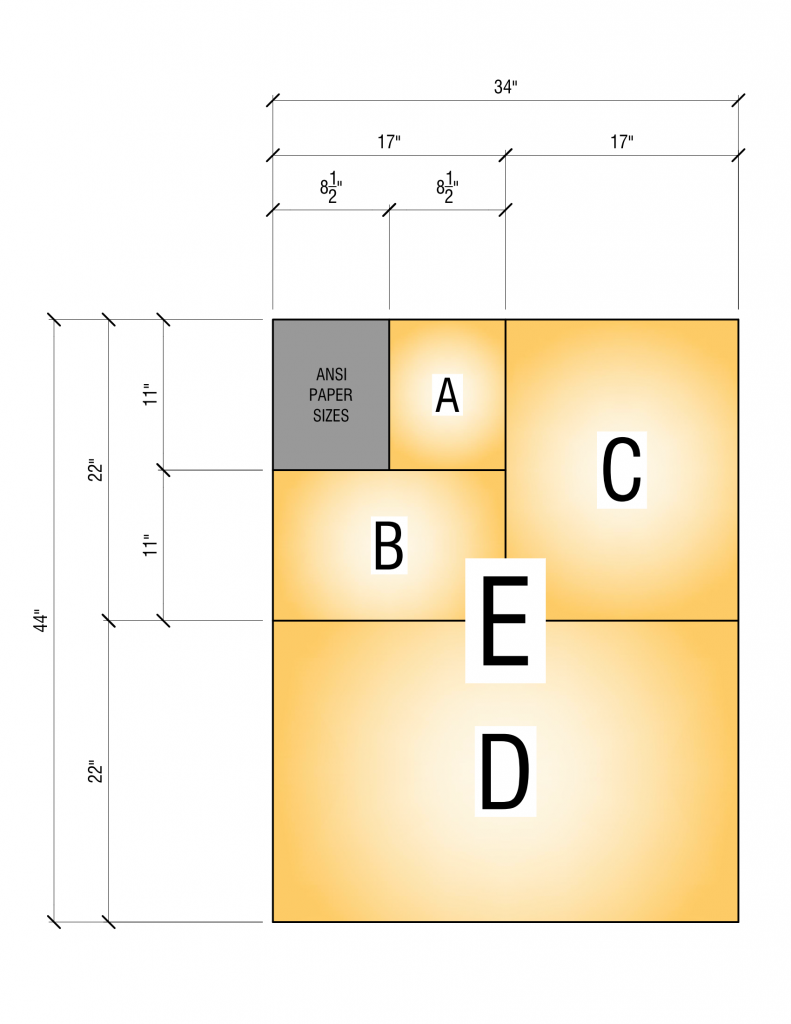
The engineering series is built up from Letter, 8.5 × 11 in., which becomes size A; B, C, D and E follow. They are universally called ANSI sizes, though strictly ANSI is the body that accredits the standard rather than the one that writes it — the sheet sizes and formats for engineering drawings are set out in ASME Y14.1, an American National Standard.
Unlike the ISO standard sizes which have the single aspect ratio of 1:√2, ANSI standard sizes have two aspect ratios 1:1.2941 and 1:1.5455 which means that enlarging and reducing between the sizes is not as easy as with the ISO sizes and leaves wider margins on the enlarged/reduced document.
| Size | Width x Height (mm) | Width x Height (in) | Aspect Ratio | Nearest ISO |
| A | 216 x 279 mm | 8.5 x 11.0 in | 1:1.2941 | A4 |
| B | 279 x 432 mm | 11.0 x 17.0 in | 1:1.5455 | A3 |
| C | 432 x 559 mm | 17.0 x 22.0 in | 1:1.2941 | A2 |
| D | 559 x 864 mm | 22.0 x 34.0 in | 1:1.5455 | A1 |
| E | 864 x 1118 mm | 34.0 x 44.0 in | 1:1.2941 | A0 |
Download the PDF and DWG files of these ANSI Paper Sizes Illustrations
The sheet names you will hear
The two small ANSI sizes have office-paper names that turn up on plotter drivers and print-shop order forms:
- ANSI A is Letter, 8.5 × 11 in.
- ANSI B is Tabloid or Ledger, 11 × 17 in. — the two names are the same sheet, Tabloid usually meaning portrait and Ledger landscape, though in practice they are used interchangeably.
- Legal, 8.5 × 14 in., is not part of the drawing series at all. It is an office size that happens to sit near it, and no ANSI or Arch drawing sheet matches it.
Both series double — but only every second size
The usual line is that the American sizes do not scale cleanly the way ISO A sizes do. That is half right, and the other half is useful.
Each sheet is exactly two of the one before it — ANSI B is two A sheets side by side, C is two Bs, D is two Cs. What changes is the shape: because the long and short sides swap roles each time, the aspect ratio alternates between 1:1.2941 and 1:1.5455 instead of staying at 1:√2.
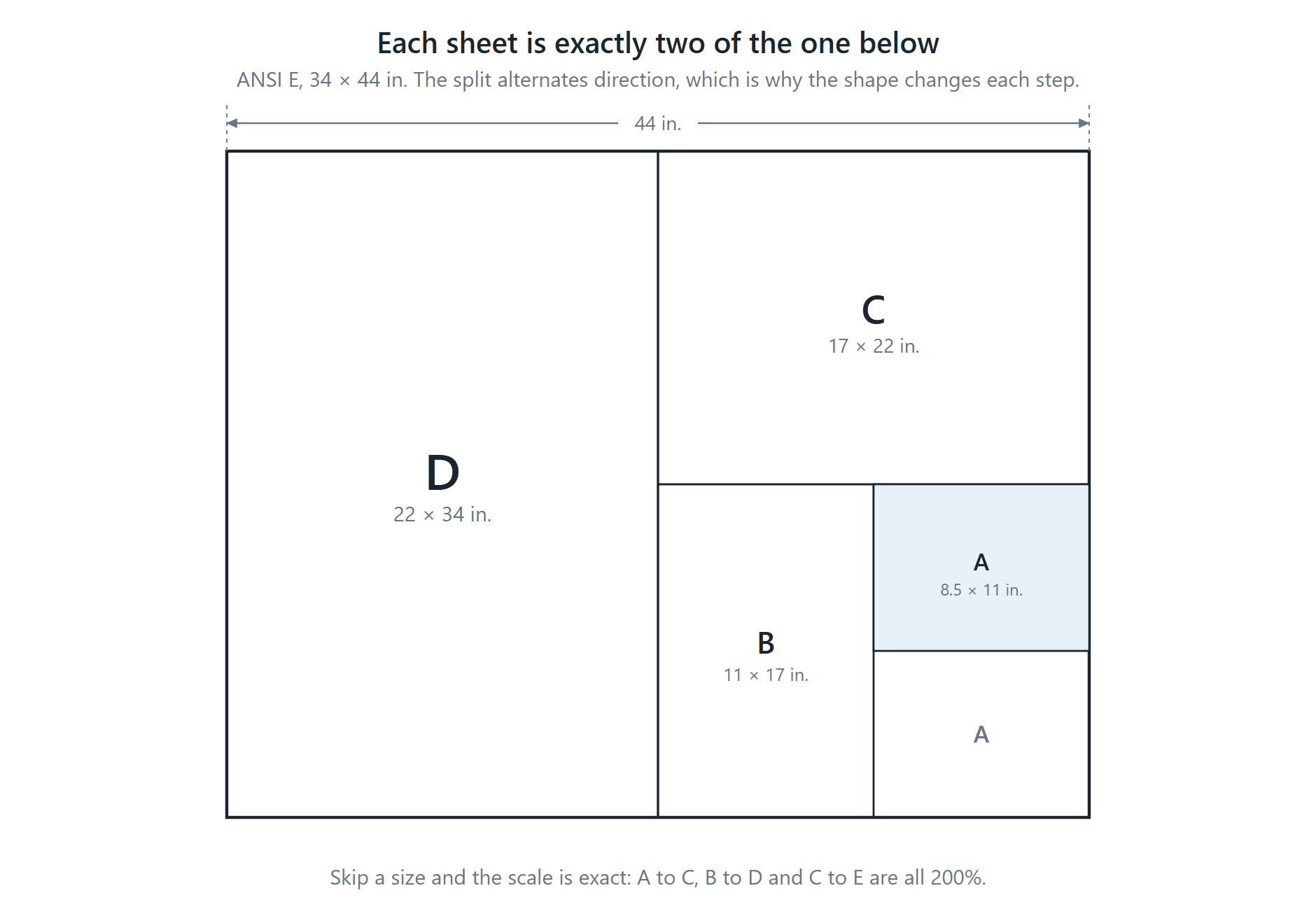
The practical consequence is a rule worth knowing at the plotter:
- Skip a size and the scale is exact. A to C, B to D, C to E are all precisely 200% — and the reverse, 50%. Same in the Arch series: Arch A to Arch C, Arch B to Arch D, Arch C to Arch E.
- Go one size and it is not. A to B fits at 129.4% with the excess left as margin down one side, because the proportions no longer match.
So an ANSI D drawing reduces onto an ANSI B sheet at exactly half size, and a check print at half of D is a genuine 1:2 of the original — the scale bar still reads true if you halve it. Reduce that same D drawing onto a C sheet and nothing about it is a round number any more.
The ISO A series avoids the problem entirely by holding one aspect ratio the whole way, which is why every step down that series is 70.7% and every second step is 50%. If you work across both, the reduction ratios chart has the ISO numbers.
Which series should you use?
In practice the choice is usually made for you, and the honest answer is that consistency across a project matters more than the merits of either series.
- Follow the client or the consultant set. If the architectural drawings arrive at Arch D, issue your structural or services drawings at Arch D too. A set that mixes sizes is a set that will not fold, file or scan as one job.
- Follow the plotter and the print shop. Roll widths are the real constraint. A 36 in. roll takes Arch D and Arch E comfortably; a 34 in. roll does not take Arch D at all.
- Working outside North America? Use the ISO A series — see standard paper sizes. Everywhere but the United States and Canada, A1 is the drawing sheet and A3 is the check print.
The one decision worth making deliberately is the title block, because that is what has to be redrawn if you change your mind later.
ANSI ARCH Titleblocks for CAD Drafting
| Title Block Description | Software | URL For Free Download | Image Preview |
| ANSI Architectural Borderless Title Block Series. Paper Sizes included ARCH A, ARCH B, ARCH C, ARCH D, ARCH E, ARCH E1. | Revit 2021 | ANSI Architectural title blocks – borderless style | 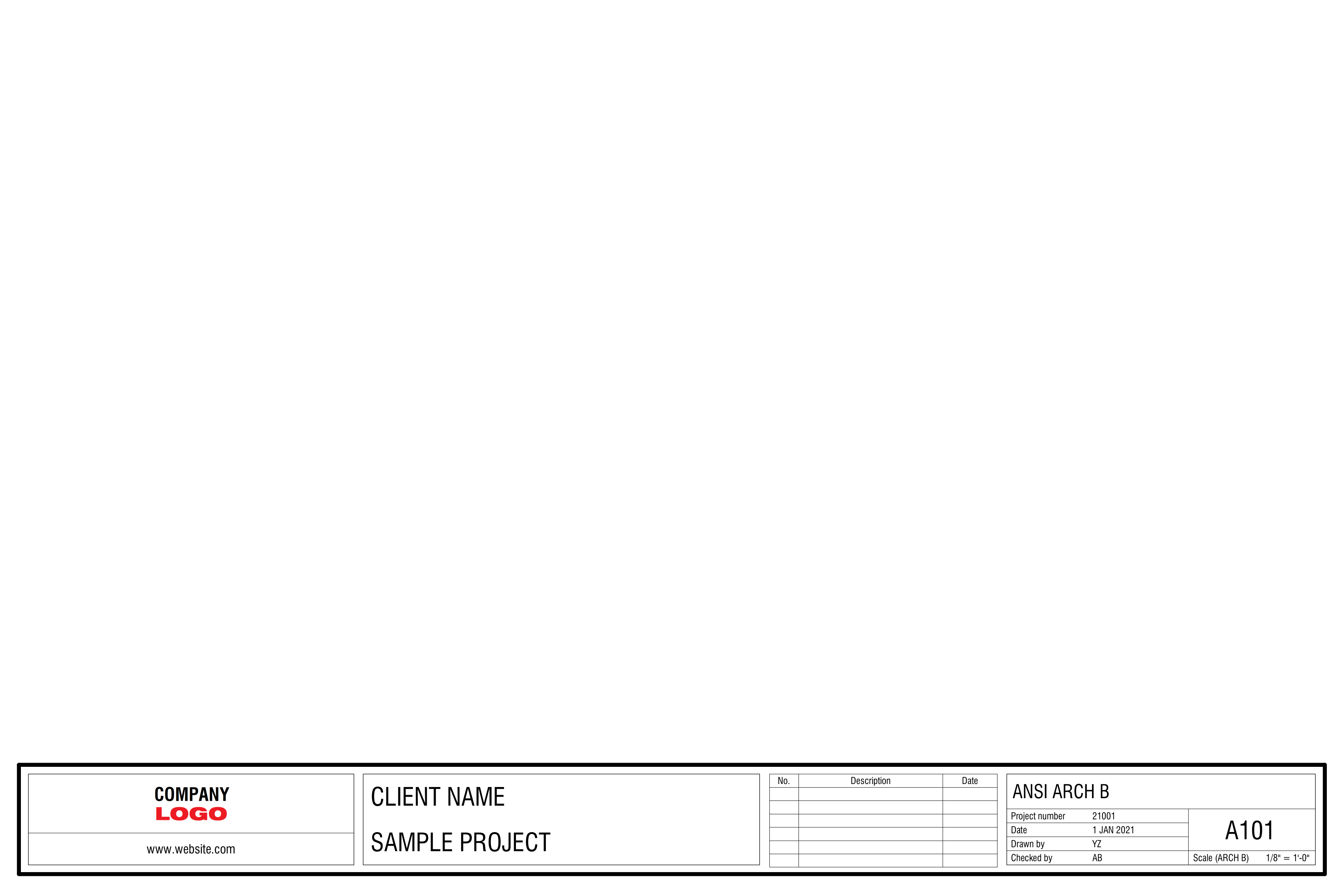 |
| ANSI Architectural Grey Style Title Sheet Series. Paper Sizes included ARCH A, ARCH B, ARCH C, ARCH D, ARCH E, ARCH E1. | Revit 2017 | ANSI Architectural title sheet – grey style | 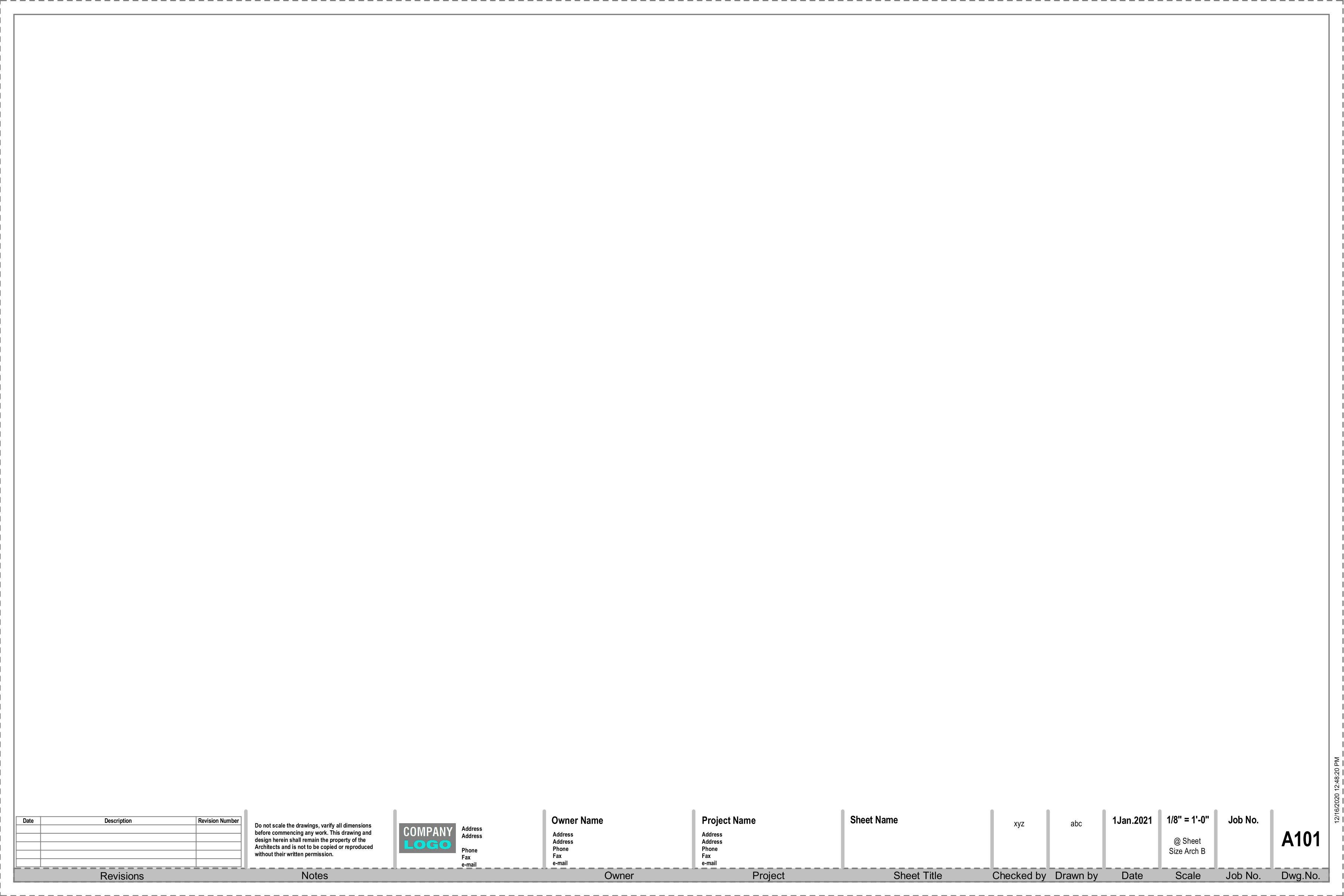 |
| ANSI Borderless Vertical Box Style, Title Sheet Series. Paper Sizes included A, B, C, D, and E | Revit 2021 | ANSI standard paper size title blocks | 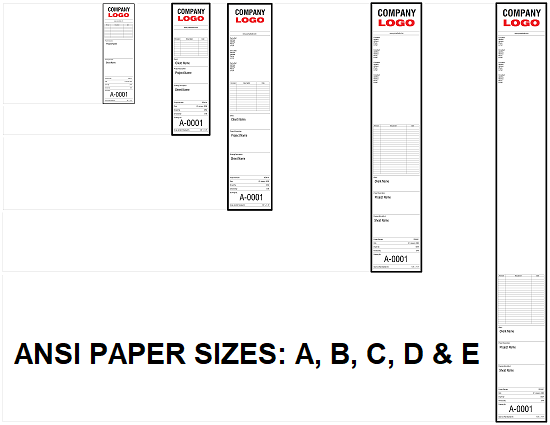 |
| ANSI Grey Style Title Sheet Series. Standard Paper Sizes included A, B, C, D and A. | Revit 2017 | ANSI paper size title blocks – grey style | 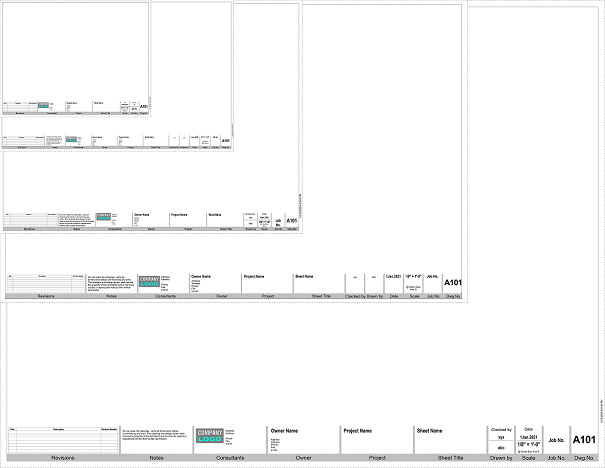 |
All four sets are Revit families. Both series are covered — Arch A to E1 and ANSI A to E — in a borderless style and a grey style.
References
- ASME Y14.1, Decimal Inch Drawing Sheet Size and Format — the standard behind the ANSI A to E series
- American National Standards Institute
- Standard paper sizes — the ISO A series
- Reduction ratios and scale change chart
- How to fold an A1 drawing